
PDG PROmote 2026+
ForceReadiness.comEducation
4.346.00 Reviews
- Version
- 11.1
- Installs
- 10.00K
- Age Rating
- Everyone
Screenshots
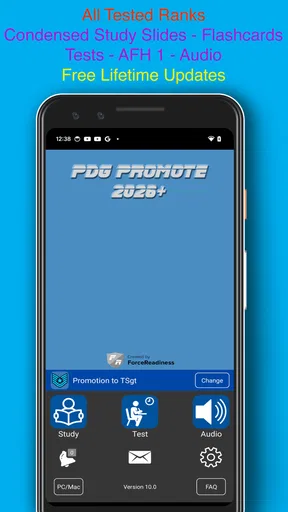
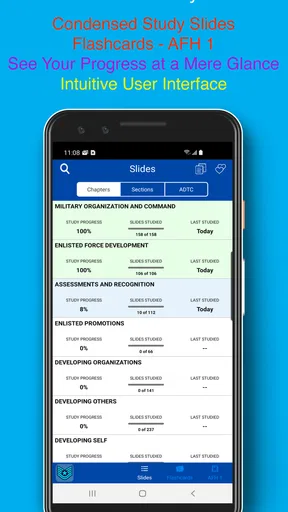
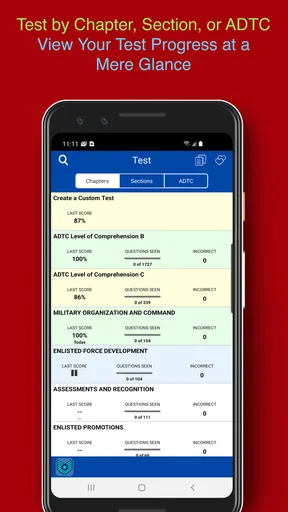
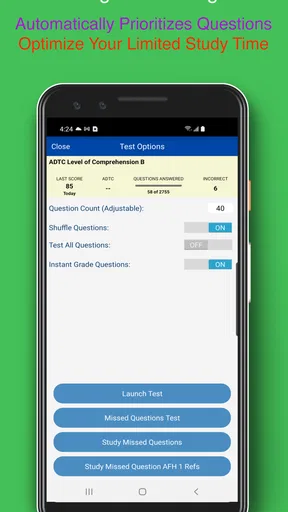
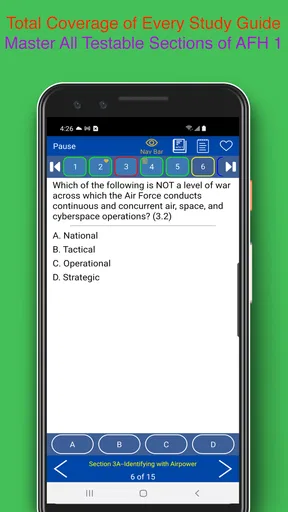
Our Review of PDG PROmote 2026+
 Analysis by Appyee
Studying for an Air Force promotion exam is the kind of task that can sit on your to-do list for weeks without becoming a real habit. PDG PROmote 2026+ is built for that exact problem: it is an education app aimed at Airmen preparing for promotion to SSgt and TSgt. I found its appeal easy to understand during the first week. Instead of treating study time as a large project, it gives you a focused place to return to whenever you have a spare moment.
The app is developed by ForceReadiness.com and currently carries a 4.3 average from over fifty ratings, with more than forty written reviews. It has passed the ten-thousand-install mark, which gives it a useful level of real-world visibility without making it feel like a mass-market study tool. Its price is $34.99, the content rating is Everyone, and it runs on Android nine or later. Those details matter because this is not a casual free download that you forget after a few attempts; it is a paid study aid, so the real question is whether it continues helping after the initial motivation wears off.
What the first week feels like
My first impression was that the app makes promotion preparation feel more approachable than opening a large manual and deciding where to begin. The store short description, “PDG PROmote,” is brief, but the practical purpose is clear once you use it: this is a dedicated companion for Airmen who want repeated exposure to promotion-study material rather than a general education platform.
The first week is where the app has its strongest psychological advantage. A learner can use a short break, a quiet moment before work, or a few minutes at home to keep the material active. That matters because early study sessions are often less about mastering everything immediately and more about discovering which subjects feel familiar, which ones are weak, and which ones need deliberate review.
I would not approach it as a replacement for every official resource. I would use it as the layer that turns passive reading into active recall. Reading a publication can make the material look familiar, but answering questions forces me to decide whether I actually know the answer. That distinction is especially useful when I am tired or convinced that I understand a topic simply because I have seen the wording before.
A sensible first-week routine is to begin with short sessions instead of trying to complete a marathon review. I would use the opening days to learn how the app presents its material, note subjects that repeatedly slow me down, and avoid treating a high early score as proof that the entire syllabus is covered. The best early result is not confidence by itself; it is a clearer map of what deserves attention.
That makes the app particularly suitable for an Airman who has already decided to prepare but struggles with consistency. It is also useful for someone returning to study after a long gap, because the low-friction format can help rebuild the habit. On the other hand, a person who has not yet gathered the relevant official guidance may be better served by organizing those sources first. No quiz-style companion can compensate for studying the wrong material or ignoring changes that affect the current promotion cycle.
Turning spare minutes into useful review
The most practical use case is not a dramatic study session. Imagine finishing a shift with ten minutes before another obligation. Opening a large document may feel unrealistic, so the time disappears. A focused promotion app gives that same interval a clear purpose: review a small amount, notice a weak area, and return later. Repeated small sessions are more sustainable than waiting for a perfect evening that rarely arrives.
I also like the idea of separating recognition from confidence. When I answer something correctly, I should still ask whether I knew it or merely recognized a familiar phrase. When I miss an item, I should record the subject rather than simply tapping forward. That habit turns the app from a stream of questions into a diagnostic tool. The value is not only in the individual answer; it is in seeing where my preparation is uneven.
For a new user, I recommend keeping a simple outside note with three headings: topics I miss, topics I guess, and topics I can explain. The app can prompt the review, but that small classification prevents false confidence. It also makes later sessions more intentional, especially when the novelty of a new download has disappeared.
Why it can remain useful month after month
The lasting value of a study app depends on whether it supports a repeatable routine. PDG PROmote 2026+ has a clear advantage here because its purpose is narrow. It is not competing for attention with language lessons, fitness goals, entertainment, and unrelated courses. When I open it, the reason for being there is obvious: promotion preparation.
That focus helps during the middle stage of studying, when the first burst of enthusiasm has faded. A dedicated tool can act as a daily reminder of the larger goal without requiring me to rebuild a study plan from scratch every time. I can use it for maintenance while working through deeper material elsewhere, then return to it when I need to test whether the information is still available from memory.
The app makes the most sense as part of a rotating study system. I would not use the same review pattern indefinitely. Early on, I would sample broadly to identify weak areas. In the middle period, I would spend more time on those weak areas and use familiar subjects for occasional checks. Closer to the exam, I would emphasize mixed review so that I am not relying on the predictable order or context of one topic.
This rotation is important because repeated exposure can create an illusion of improvement. If I see similar material in the same sequence, I may feel faster without becoming more flexible. To protect against that, I would alternate app sessions with explaining answers aloud, reviewing official material, and writing brief summaries from memory. The app is strongest when it supplies repetition; other methods are needed to confirm depth.
There is also a useful distinction between maintenance and primary learning. If I already understand a subject, the app can help keep it available through regular recall. If I have never learned the subject properly, quick practice alone may not provide enough context. In that situation, I would pause the rapid-review habit, study the underlying source carefully, and then use the app to check retention.
A routine that survives a busy schedule
I would build the month around three kinds of sessions. The first would be a brief check-in on ordinary workdays, intended to keep the material familiar. The second would be a longer weekly review in which I examine recurring errors and return to the source behind them. The third would be a periodic mixed session that tests whether I can move between subjects without relying on a narrow cue.
This approach gives the app recurring value without asking it to carry the whole preparation process. It also answers a question many buyers have: do I need to use it every day to justify paying for it? In my view, no. The purchase is easier to justify when it becomes a dependable part of a broader plan, but forcing daily use can turn study into a box-ticking exercise. Consistent, purposeful use is better than opening it mechanically.
The price makes that judgment personal. At $34.99, I would want to use it across a meaningful preparation period rather than for a single curious weekend. An Airman with a clear promotion goal and limited study time may find the focused format worthwhile. Someone who prefers printed notes, already has a complete study system, or only wants a one-time overview may not get enough ongoing value from a paid companion.
The maintenance burden behind the convenience
The main maintenance task is not technical; it is intellectual. I have to keep track of what I know, what I am guessing, and what needs confirmation. A study app can make review convenient, but convenience can also encourage shallow repetition. If I simply answer, glance at the result, and move on, I may be maintaining activity rather than knowledge.
I would therefore keep the app connected to a personal review log. After each session, I would write down only the subjects that caused hesitation or repeated mistakes. The point is not to create a second textbook. It is to make the next session more efficient. Once a topic becomes reliable, I would reduce its priority instead of spending all my time on comfortable questions.
Another maintenance issue is keeping the app in its proper place within the preparation calendar. The current version is 11.1, and the app is positioned specifically around promotion study for SSgt and TSgt. That makes it important to check that my broader study materials match the promotion cycle and requirements I am preparing for. I would not assume that an app alone defines the complete scope of an exam. Its role is to reinforce preparation, not remove the need for judgment.
Device compatibility is straightforward for many Android users because the minimum operating system is Android nine. Still, anyone using an older phone should check compatibility before paying. That is a small practical step, but it matters more with a paid app than with a free trial. I would also make sure I have a comfortable way to study on the device I use most often, since a routine breaks quickly when access is inconvenient.
The Everyone age rating is unsurprising for an education tool, but the intended audience is more specific than that rating suggests. The app is not designed for general school revision or broad professional development. Its usefulness depends on being an Airman who is preparing for the relevant promotion path. That narrow fit is a strength for the right person and a reason to skip it for everyone else.
Where study fatigue begins
Any focused quiz app can become tiring when every session feels identical. The first week benefits from novelty, but novelty is not a long-term learning strategy. If I keep opening the app without changing my goal, I may start measuring success by how often I use it rather than by whether I can explain the material accurately.
There is also a risk of overvaluing quick answers. Promotion preparation is not only a speed exercise. Some subjects require careful reading, attention to distinctions, and the ability to connect an answer with the underlying policy or concept. A rapid question-and-answer rhythm can be excellent for recall while still leaving gaps in comprehension. I would treat uncertainty as a signal to investigate, not as something to hide by repeating the same item.
Another source of fatigue is the pressure to study in one fixed way. The app is dedicated, which is convenient, but that same focus can feel repetitive over a long stretch. I would protect against burnout by changing the purpose of each session: one for broad sampling, one for weak areas, one for mixed recall, and one for explaining concepts without looking at the screen. The app remains central, but the mental task changes.
This is also where the usual alternatives have a role. Official publications are better for authoritative context and detailed reading. Personal notes are better for capturing explanations in my own words. A study group can expose misunderstandings that solitary practice leaves untouched. Flashcards may be better for someone who wants to build a fully customized deck. General learning apps may offer more varied study mechanics, but they are less tightly connected to this particular promotion goal.
Compared with those alternatives, PDG PROmote 2026+ earns its place through focus and convenience rather than breadth. I would choose it when I need a dedicated way to revisit promotion material repeatedly. I would choose official sources when I need to verify meaning, scope, or current guidance. I would choose a group or mentor when I need discussion and accountability. The strongest plan uses the app to fill the repetition gap instead of asking it to replace every other method.
Who should pay for it, and who should pass
I think the app is a good candidate for an Airman who has a defined SSgt or TSgt promotion target, prefers studying on a phone, and knows that regular recall is a weak point. It is also a reasonable choice for someone whose schedule makes long reading sessions unreliable. The focused purpose can make it easier to start, which is often the hardest part of preparation.
I would be more cautious if I were still deciding whether to pursue promotion, had no plan to study for an extended period, or expected one app to tell me everything I need to know. The price is difficult to justify for casual browsing. I would also skip it if my preferred method is entirely paper-based or if I learn best through detailed discussion rather than independent review.
Before buying, I would ask myself three practical questions. Do I have a real preparation window in which I will return to the app? Do I already have access to the official material needed for deeper study? And will mobile review fit naturally into my work and home routine? If the answer to all three is yes, the purchase has a clearer purpose. If not, the app may become an expensive reminder of an intention I never turned into a habit.
Does it earn lasting space?
After the first-week appeal fades, the app’s value comes down to disciplined use. I do not see PDG PROmote 2026+ as a complete learning environment, and I would not recommend treating it as one. Its better role is more practical: a focused, repeatable review companion that helps keep promotion material active between deeper study sessions.
The developer, ForceReadiness.com, has created something with a specific audience rather than a broad educational promise. That specificity is exactly why it can be useful. An Airman preparing for SSgt or TSgt promotion does not need to search through a general learning catalog to find the relevant purpose. The app points attention toward one demanding objective.
My lasting recommendation is conditional but positive. I would keep it installed when I had a concrete promotion plan, a habit of logging weak areas, and the discipline to verify difficult material against authoritative sources. I would not keep opening it just to preserve a streak or collect comfortable correct answers. The difference between those two approaches determines whether it becomes a genuine study aid or just another unused purchase.
At a 4.3 average and with over ten thousand installs, it has enough adoption to take seriously, while its paid model encourages a more deliberate decision. I would buy it for focused repetition, not for entertainment or a complete replacement for traditional preparation. Used that way, it can earn a regular place in a month-to-month routine and remain useful after the initial excitement has gone.
My final view: this is a specialized education app for Airmen who need structure and repeated recall while preparing for promotion. Its strongest benefit is reducing the friction between “I should study” and actually completing a useful review session. Its main weakness is that repetition can become shallow or tiring if I stop varying my study method. For the right learner, that is a manageable limitation, and the $34.99 cost can be worthwhile over a serious preparation period. For everyone else, official resources, personal notes, or a more flexible study system may be the better long-term choice.
Verdict
Strengths of PDG PROmote 2026+
- Focused tools for planning and tracking professional development goals.
- Useful for organizing promotion-related tasks, milestones, and supporting evidence.
- A specialized interface may reduce the need for separate career-planning tools.
- Can help users review progress before performance or promotion discussions.
- Relevant for professionals seeking a more structured advancement strategy.
Limitations of PDG PROmote 2026+
- Its usefulness may depend heavily on the quality of the user’s career data.
- Some features could feel too specialized for casual or early-career users.
- Promotion guidance may not match every company’s review process or criteria.
- Users may need to update goals regularly to keep information accurate.
- Privacy considerations matter when storing sensitive career or workplace details.
Other Releases by ForceReadiness.com
View All
PROmote - Army Study Guide
Education4.3

Jumpmaster PRO Study Guide
Education3.3
Similar Picks in This Category
View All
Duolingo: Language Lessons
Duolingo4.7

Google Classroom
Google LLC2.8

Unacademy: Learn & Crack Exams
Unacademy3.2

Bible App for Kids
Life.Church4.4

Cake - Learn English & Korean
Cake Corp.4.7

Brainly: AI Homework Helper
Brainly4.5
Frequently Asked Questions
What is PDG PROmote 2026+ used for?
PDG PROmote 2026+ is designed to help users manage and support promotional, marketing, or business-related activities from a mobile device. Depending on the version and account provided by the organization behind it, the app may offer access to campaigns, promotional materials, updates, performance information, or communication tools. Its exact purpose can vary, so users should check the official description and requirements before downloading it.
Is PDG PROmote 2026+ free to download and use?
The application may be available to download without an upfront charge, but that does not necessarily mean every feature is free. Access could depend on registration, an invitation, an active membership, or authorization from PDG or an associated organization. Before installing, review the store listing and any terms shown during sign-up to understand whether subscriptions, paid services, or separate account fees apply.
Do I need an account or invitation to use PDG PROmote 2026+?
Users may need an approved account, invitation, or login credentials to access the main functions of PDG PROmote 2026+. This is common for promotional and business applications that are intended for a specific community, company, or campaign. If you can install the app but cannot sign in, contact the relevant administrator or official support channel rather than creating multiple accounts or sharing someone else’s credentials.
What permissions and personal information does PDG PROmote 2026+ require?
During installation or first use, PDG PROmote 2026+ may request permissions connected with notifications, internet access, storage, camera functions, or account information, depending on the features enabled in your version. Read each permission request carefully and allow only what is necessary. It is also worth checking the developer’s privacy policy to learn how profile data, activity, and submitted content are handled.
Will PDG PROmote 2026+ work on every Android or iOS device?
Compatibility depends on the operating system version, device hardware, available storage, and the release distributed through the official app store. Older phones or tablets may not support the latest build, while some features could require a stable internet connection or newer system components. Before downloading, compare your device’s operating-system version with the requirements listed on Google Play or the Apple App Store.
